
Supporting Nurses Where It Matters Most: The Benefits of Virtual Observation
Nurses are the foundation of patient care. They manage complex clinical responsibilities, coordinate communication across care teams, respond to patient needs, document care, educate families, and provide the compassionate human connection that patients depend on during vulnerable moments.
Yet across healthcare settings, nursing teams continue to face increasing demands on their time and attention. Staffing shortages, rising patient acuity, high census levels, and administrative responsibilities can make it difficult for nurses to maintain the level of continuous observation some patients require. Virtual observation offers a practical, scalable way to support nursing workloads while helping hospitals strengthen patient safety and care delivery.
CareView Communications’ virtual observation solution is designed to extend the reach of bedside teams by providing real-time monitoring, communication, and proactive support for patients who may be at risk for falls, unsafe ambulation, device removal, wandering, or other safety concerns.
Extending the Reach of the Care Team
Traditional one-to-one observation can be resource-intensive. Assigning a staff member to continuously observe a single patient may be necessary in some situations, but it can also place additional strain on already limited staffing resources. Virtual observation gives hospitals another option.
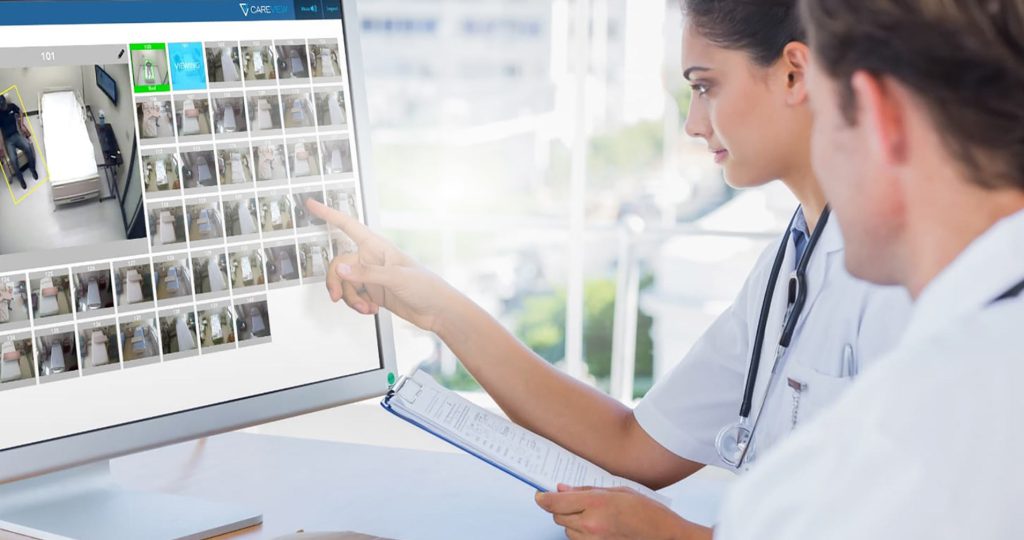
With CareView’s virtual sitting solution, trained remote observers can monitor multiple patients from a centralized location while maintaining direct communication with patients and bedside staff. This approach helps nurses receive additional support without requiring a staff member to remain physically stationed in every room.
When a patient begins to move toward the edge of the bed, attempts to get up without assistance, or shows signs of unsafe behavior, the virtual observer can intervene through two-way audio communication and notify the care team when needed. This early awareness can help nurses prioritize their response and address potential safety risks before they become emergencies.
Helping Nurses Focus on Clinical Care
Nurses are most effective when they can focus their time on clinical assessment, medication administration, care coordination, patient education, and direct bedside care. When nurses are repeatedly pulled away to respond to preventable safety concerns, it can disrupt workflow and add to the pressure of an already demanding shift.
Virtual observation can help reduce unnecessary interruptions by providing an additional layer of oversight for patients who require closer monitoring. Rather than relying solely on routine rounding or waiting for an alarm to sound after a patient has already begun to move, remote observers can identify concerning behavior in real time.
This proactive approach supports nurses by helping them make more informed decisions about where their attention is needed most. It also allows bedside teams to respond with greater confidence, knowing that another set of trained eyes is helping monitor patients who may need additional support.
Supporting Safer, More Efficient Workflows
A well-designed virtual observation program can improve workflow efficiency across the care environment. CareView’s technology combines live video monitoring, two-way audio communication, advanced motion detection, and patented Virtual Bed Rails® and Virtual Chair Rails® technologies to help identify movement that may indicate a patient is attempting to leave a safe position.
These tools can help alert virtual observers to potential risks sooner, allowing them to communicate directly with the patient and escalate to the bedside team when appropriate. By supporting earlier intervention, hospitals may be able to reduce the number of urgent calls, unnecessary room entries, and reactive responses that can consume valuable nursing time.
Virtual observation also provides flexibility. Hospitals can scale observation support based on patient census, acuity, and staffing needs. This can be especially valuable during periods of high demand, when bedside teams may be caring for more patients with complex needs.
Improving the Patient Experience
Virtual observation is not intended to replace the nurse-patient relationship. Instead, it is designed to support it.
Patients still benefit from the clinical judgment, compassion, and hands-on care nurses provide. Virtual observers add another layer of reassurance by offering real-time communication when a patient needs help, feels confused, or is preparing to move independently.
For patients and families, this added level of observation can provide greater peace of mind. For nurses, it can help create a safer environment where patient needs are identified earlier and addressed more efficiently.
A Meaningful Tool for Nursing Support
As hospitals continue to look for ways to protect staff, improve patient safety, and manage workforce challenges, virtual observation is becoming an important part of modern care delivery.
CareView Communications helps healthcare organizations extend the reach of their nursing teams through virtual sitting technology that supports proactive intervention, efficient workflows, and safer patient care. By helping nurses focus on the work only they can do, virtual observation can play a meaningful role in supporting both the care team and the patients they serve.